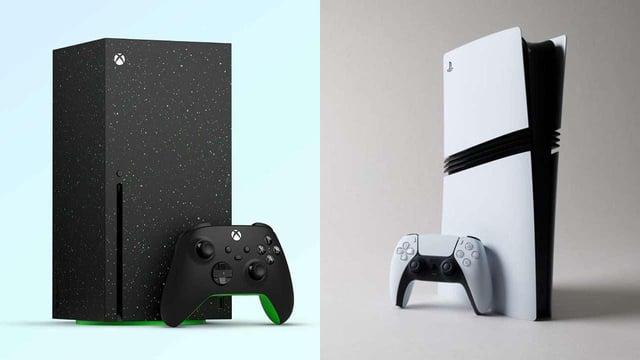
Is the Xbox Console Dead? Bold Claims from Industry Insiders
The world of video game consoles is a battlefield of innovation, exclusives, and fierce competition. For decades, Microsoft's Xbox has stood as a formidable contender, but recent pronouncements from high-profile industry figures and shifts in the retail landscape are sparking a provocative question: Is the Xbox console, as we know it, dead? This isn't just hyperbole; it's a sentiment echoing from an influential analyst and a former Microsoft executive, suggesting a fundamental flaw in the company's current strategy.
The bold claims revolve primarily around Microsoft's aggressive embrace of Game Pass and its multiplatform push, which some argue has inadvertently diminished the perceived value and necessity of the Xbox hardware itself. With hardware sales reportedly struggling and key voices questioning the long-term viability, it's time to dive into why many believe the Xbox console's future is bleak.
The Pachter Perspective: Game Pass as a Double-Edged Sword
Few analysts in the gaming industry are as outspoken as Michael Pachter, Strategic Advisor at Wedbush Securities. Pachter, known for his unvarnished opinions – from calling consumers "stupid" over loot boxes to criticizing Sony's Bungie acquisition – has now turned his gaze sharply on Microsoft's Xbox strategy, making a stunning pivot in his stance on Game Pass.
Initially, Pachter was a staunch advocate for Game Pass, even prophesying in 2022 that the service would explode to 100 million active subscribers with the addition of Activision Blizzard games, a prediction he later doubled down on, projecting 200 million within a decade. However, recent Game Pass restructurings and price increases have dramatically altered his outlook. Pachter now unequivocally states, "
I think the console is dead. I think they’ve already blown it with the console by embracing Game Pass."
His central critique lies with the "all or nothing" nature of Game Pass Ultimate, particularly at its current $30 per month price point. Pachter argues this model is fundamentally flawed. "
How can you make a business charging people $360 a year up front when a game costs only $70?" he posits. He believes Microsoft should have adopted a "cafeteria" approach – a more flexible, lower-priced subscription (suggesting $10 a month for "all you can eat") or a Steam-like model for connectivity, allowing players to purchase individual games without console ownership, while still leveraging Microsoft's extensive game library and cloud infrastructure.
The core of Pachter's concern is that by pushing Game Pass so aggressively, Microsoft has inadvertently devalued the Xbox console itself. If nearly every major first-party game is available day-and-date on Game Pass, and increasingly on PC or even rival consoles, the compelling reason to buy an Xbox console dwindles. This phenomenon is, arguably, already reflected in the console's hardware sales over the last three to four years. For a deeper dive into Pachter's specific arguments, read our related article:
Pachter: Xbox Console "Dead" Due to Game Pass Strategy.
Former Microsoft Exec Echoes Concerns: Mike Ybarra's Stark Warning
Pachter isn't alone in his skepticism. Mike Ybarra, a former Microsoft executive and ex-Blizzard president, has also voiced strong concerns about the future of Xbox hardware. His comments came in the wake of Sony celebrating another significant sales milestone for the PlayStation 5, reaching a staggering $136 billion mark and being hailed as the most successful PlayStation generation by Sony executive Hideaki Nishino.
Ybarra's reaction was sharply sarcastic: "
But hey, the console market isn’t a successful business. It is if you do it right." This pointed remark from an individual who spent years within Microsoft's ecosystem suggests a deep frustration with what he perceives as questionable strategic decisions by his former employer. The implication is clear: while Sony is "doing it right" with a traditional console strategy emphasizing exclusives and hardware sales, Microsoft's approach is missing the mark.
Ybarra's critique, particularly from an ex-insider, carries significant weight. It implies that the console market *can* indeed be a highly lucrative venture, but success hinges on a coherent strategy that prioritizes the value proposition of the hardware. The ongoing narrative of fewer true Xbox exclusives and repeated Game Pass price increases appears to be eroding that proposition for many.
The Retailer Reality Check: Vanishing Consoles?
Beyond the pronouncements of analysts and ex-executives, tangible evidence of the Xbox console's struggle is reportedly manifesting at the retail level. Rumors and reports suggest that some retailers have begun to either significantly reduce their stock of Xbox systems or, in some instances, stopped selling them altogether.
This retail shift is a critical indicator. Retailers make stocking decisions based on demand, sales velocity, and profit margins. If Xbox consoles are sitting on shelves, failing to tempt buyers, or offering less attractive margins compared to competitors, it's a logical business decision to reallocate shelf space to more profitable products. The combination of another price increase for Game Pass and a perceived scarcity of must-have exclusive games makes it increasingly difficult for retailers to justify prominent display space for Xbox hardware.
For consumers, this means that the visibility and accessibility of Xbox consoles could diminish, further impacting potential sales. A less visible product is a less bought product. The erosion of retail presence would compound the challenges faced by Microsoft in a fiercely competitive market. The intertwined issues of Game Pass pricing and the perceived value of the console itself are critical to understanding this retail reluctance. Explore more on this topic in our article:
Game Pass Price Hikes: Is Microsoft Killing Xbox Console Value?.
Beyond the Console: What's Microsoft's End Game?
If the Xbox console, in its traditional sense, is indeed facing an existential crisis, what exactly is Microsoft's long-term play? It appears the company might be charting a course beyond the conventional console wars, aiming for a broader, platform-agnostic ecosystem.
Microsoft's strategy seems to be twofold:
- Game Pass as a Universal Gaming Hub: The ultimate vision might be for Game Pass to become the "Netflix of gaming" – a service accessible on any device, from smart TVs and mobile phones to PCs and, yes, even rival consoles via cloud streaming. This would position Xbox as a service brand rather than solely a hardware brand.
- Multiplatform Dominance: By bringing more first-party titles to PlayStation, Nintendo Switch, and PC, Microsoft expands its reach exponentially. While this might dilute the incentive to buy an Xbox console, it potentially funnels more players into the Game Pass ecosystem and generates revenue from game sales on other platforms. This strategy implies a willingness to sacrifice console market share for overall gaming market share.
This shift presents both opportunities and risks. On one hand, it allows Microsoft to tap into a much larger audience than console ownership alone permits. On the other hand, it risks alienating loyal Xbox console owners who desire exclusive experiences and a clear hardware advantage. The challenge for Microsoft is to maintain brand loyalty and identity in a world where "Xbox" increasingly refers to a service and a library of games, not just a physical box under the TV. The company is betting on the future of cloud gaming and subscription services, believing that content access will ultimately supersede hardware ownership.
Conclusion: The Future of Xbox in a Shifting Landscape
The pronouncements from Michael Pachter and Mike Ybarra, coupled with reports from the retail sector, paint a sobering picture for the traditional Xbox console. The strategy of leveraging Game Pass and pursuing a multiplatform approach, while potentially brilliant for Microsoft's broader gaming ambitions, appears to be actively cannibalizing the very hardware that once defined the brand.
Is the Xbox console truly "dead"? Perhaps not in the sense of ceasing to exist, but rather in its traditional role as the primary, indispensable gateway to Microsoft's gaming universe. It seems Microsoft is strategically pivoting, de-emphasizing hardware in favor of an omnipresent service model. The next Xbox console, reportedly targeting a 2027 launch, will face an immense challenge to justify its existence if the current trajectory continues.
For gamers, this shift could mean unparalleled access to games on a multitude of devices. For Microsoft, it represents a bold gamble: sacrificing hardware leadership for ecosystem dominance. Only time will tell if this calculated risk leads to a new era of gaming ubiquity for Xbox, or if it indeed marks the quiet demise of its iconic console.